lunes, 14 de enero de 2013
jueves, 3 de enero de 2013
Artisan Stucco Workshop. Decorative lime plasters
Next 23th of March we will begin a series of stucco workshops, for beginers.
During this series of introduction workshops you will learn the exact process and manufacturing of this ancient lime
mortar. A technical heritage from the Roman period, this plasters has proven to be a remarkably lasting material, with a
strong resistance to changing conditions like moist and heat and with very significant ecological properties.
DAY 1: FRESCO PLASTER (23RD MARCH)
During the first day you will learn about the history of the material and the basic techniques of making and applying fresco plaster.
DAY 2: WATERPROOF STUCCO (6TH APRIL)
We will look at the various ways to make the plaster waterproof using only natural materials.
DAY 3: SGRAFFITO (20TH APRIL)
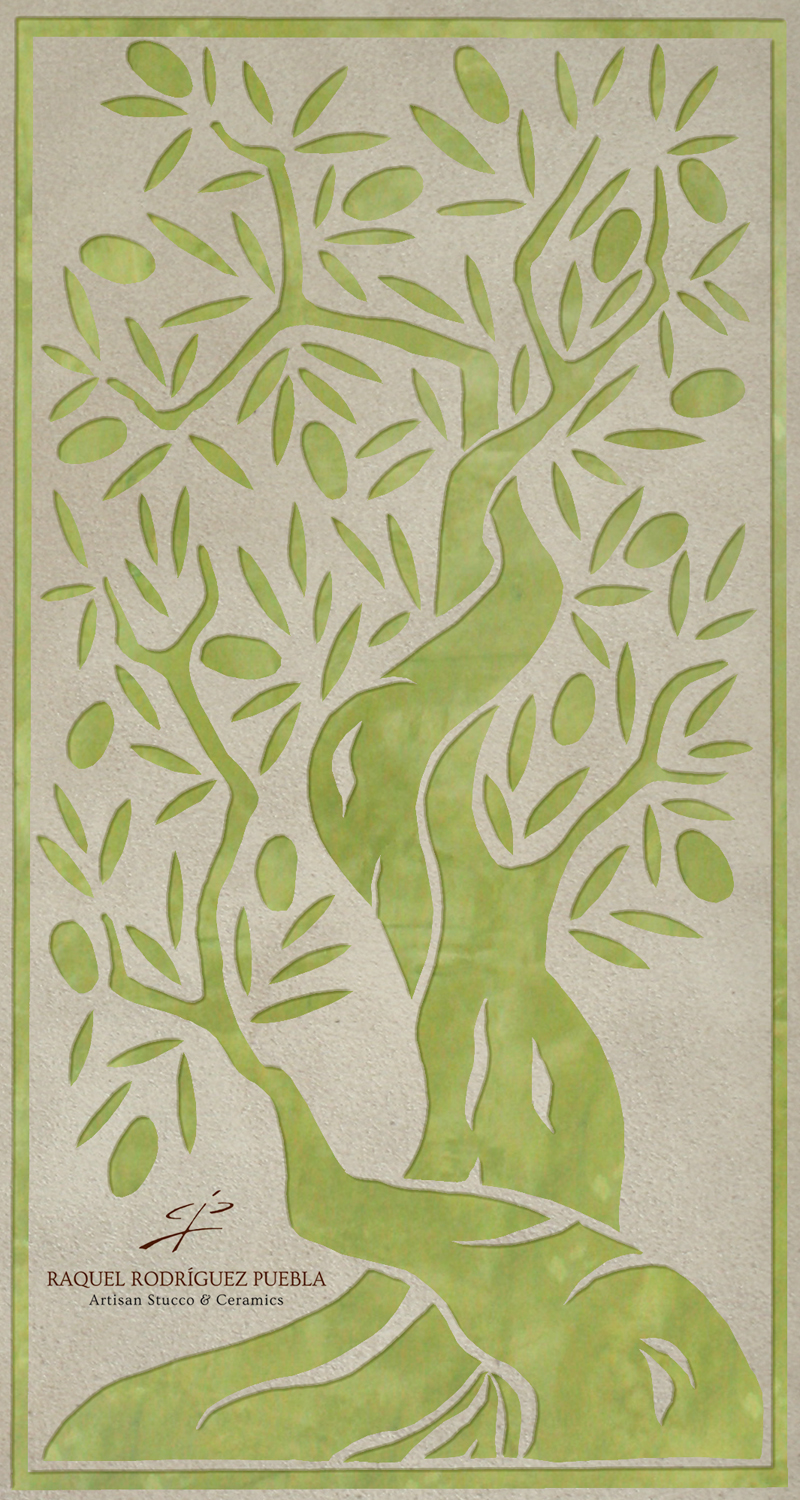
Sgraffito is the technique of cutting away the top layer of plaster to reveal the layer below. This technique offers an infinite range of variations.
Maximum 7 participants. Minimum 5 participants. The workshop will be given in the English language. All materials and lunch are included.
For more information, please contact: info@estucoartesano.com
or click in the following link Stucco Workshop
jueves, 13 de octubre de 2011
Decorative Sgrafitto Samples
This are a series of samples of an old project. This one specifically wants to combine artisan ceramic and stucco. In this case the design of the tile is continued on the wall with sgrafitto.

As you can see the possibilities are endless. This last one is a pattern designed for 2x3 meters wall.
Suitable for interior as exterior, of great dimensional stability, this is for, me the the once and future plaster.
Here are some examples of XVII Century Famous Sgraffitos, from the city of Segovia. Spain
http://tinyurl.com/SgraffitoSegovia
lunes, 5 de septiembre de 2011
Restauration of the Madrasha Palace. Granada. Spain
We restored the mortar from this beautiful XIII-XVII Century palace in the center of Granada in 2010-2011.
The building was originally an Islamic koranic school from XIII Century A.C, transformed into Town Hall by the Catholic Kings after the conquering of Granada, occurred in 1492 turning it into a Baroque Palace.
The original Praying room was though, probably due to it´s beauty conserved.


The original mortar was in such a bad condition and had suffer so many different restorations and reparations, that all the contrasting materials had caused several cracks and detachment of the parament not worth conserving.
We worked the new mortar directly from the masonry wall as you can appreciate in the following pictures.
Old windows and doors, opened and closed, an endless mixture of materials through the ages, the lack of perpendicularities and the extreme care we had to take with some of the recently restored adjoining elements, such as the honeycombed work from the Praying Room or the Mudejar coffered ceiling from the Gentlemans Saloon, made this and specially difficult work, still so rewarding
The building was originally an Islamic koranic school from XIII Century A.C, transformed into Town Hall by the Catholic Kings after the conquering of Granada, occurred in 1492 turning it into a Baroque Palace.
The original Praying room was though, probably due to it´s beauty conserved.
Praying Room, XVII Century A.C
The original mortar was in such a bad condition and had suffer so many different restorations and reparations, that all the contrasting materials had caused several cracks and detachment of the parament not worth conserving.
We worked the new mortar directly from the masonry wall as you can appreciate in the following pictures.
Old windows and doors, opened and closed, an endless mixture of materials through the ages, the lack of perpendicularities and the extreme care we had to take with some of the recently restored adjoining elements, such as the honeycombed work from the Praying Room or the Mudejar coffered ceiling from the Gentlemans Saloon, made this and specially difficult work, still so rewarding
lunes, 20 de septiembre de 2010
Restauration of the Archeological Museum Facade. Baza.
We restored this facade a two phaces, between 2009 and 2010. As you can see in the pictures we also replaced the original mortar between the bricks, removed the cement plaster that was covering them and reposed the missing or broken ones. We also Restored parts of the stones.
Everything was done with lime mortars. The tone of the brick and the stone was equaled with mineral pigments.
En esta fachada, además del estuco de revestimiento. Realizamos la restauración de la piedra y el ladrillo, así como el llagueado, previa eliminación del mortero que cubría a ambos.
Todo se realizó con morteros de cal. El tono de la piedra, se igualó con tierras colorantes
Retirada del mortero que cubría el ladrillo y del llagueado antiguo
En esta fachada, además del estuco de revestimiento. Realizamos la restauración de la piedra y el ladrillo, así como el llagueado, previa eliminación del mortero que cubría a ambos.
Todo se realizó con morteros de cal. El tono de la piedra, se igualó con tierras colorantes
miércoles, 14 de octubre de 2009
Baños Árabes de Baza
Terminamos esta obra, bajo la dirección de Francisco Ibañez hace un año y medio y acaba de recibir un premio nacional de arquitectura. "Los criterios aplicados en la restauración han sido del máximo respeto a los elementos originales".
Nuestra intervención se limitó al enfoscado y estucado de bóvedas y paños de obra nueva, replanteo de suelos en las salas inferiores y la restauración de las lucernas deterioradas
Suscribirse a:
Entradas (Atom)


